

Beyond Prophecy
Fire maidens and fiery horses in Katherine Arden's Winternight Trilogy and other Russian Folklore

Happy Imbolc, readers. The days are slowly getting longer, and I am still slowly struggling out of bed each cold morning. Winter is meant for rest, and for spending the long dark hours curled up in soft blankets with a horde of fairytales.
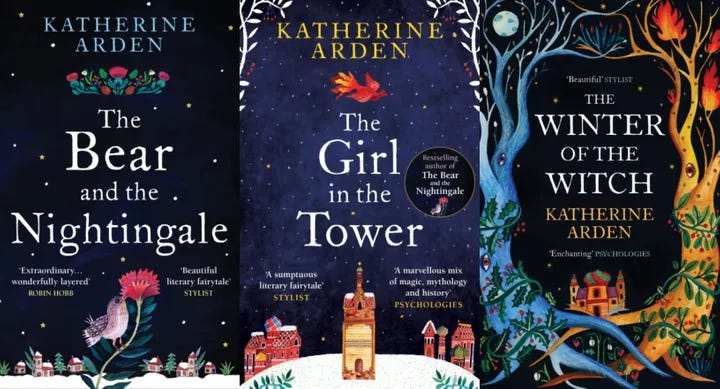
This Yuletide season we read the Winternight Trilogy by Katherine Arden, including The Bear and the Nightingale (2017), The Girl in the Tower (2017), and The Winter of the Witch (2019). The trilogy tells the tale of Vasilisa, a young girl in 14th-century Russia who discovers her inherent magic, protects her family, and falls in love with the death god, the Winter King. I recently learned the term fractured folklore, which I think adequately describes how Arden utilizes classic Russian folk tales to tell a wholly original story.
I for one absolutely adored this trilogy. I’m going to seek out a collector’s edition or boxset of the books to keep on my shelf since I read them on my Kindle. If I’m lucky I can catch Arden at a book event and have her sign them.
I’m eager to hear what you all thought of the trilogy. Which was your favorite book? Were there any twists that totally took you off guard? What are your honest thoughts about Konstantin Nikonovich? Are you craving a visit to a candlelit bathhouse?
Before we go on, readers, I will give you a fair warning: in order to discuss the wide breadth of folkloric creatures and references in these books (and I discuss a LOT, this is my longest post to date), this post is going to be quite spoiler-heavy.
With that being said, let’s ride on.
“Before the end, you will pluck snowdrops at midwinter, die by your own choosing, and weep for a nightingale.”
―Katherine Arden, The Bear and the Nightingale (Winternight Trilogy, #1)
Vasilisa the Wise

“She was neither wise nor beautiful. None of the tales spoke of both wanting and resentment, of grand gestures and terrible mistakes.”
―Katherine Arden, The Winter of the Witch (Winternight Trilogy, #3)
I first met the fairytale character Vasilisa in 2021 when I read Women Who Run With the Wolves by Dr. Clarissa Pinkola Estés (which I believe everyone should read) for a graduate writing class. The class was mainly on Young Adult fiction, but our professor also had us study some classic fairytales, Jungian psychology, and other children’s literature. I was instantly, and intensely, enthralled by the story.
Though this fairytale was not the original inspiration for Arden’s Vasilisa Petrovna (still to my great surprise; you can read about the actual origin in our December-January Book Selection(s) announcement), Arden still incorporated much of the tale (and other tales featuring the character Vasilisa) in the world of Winternight.
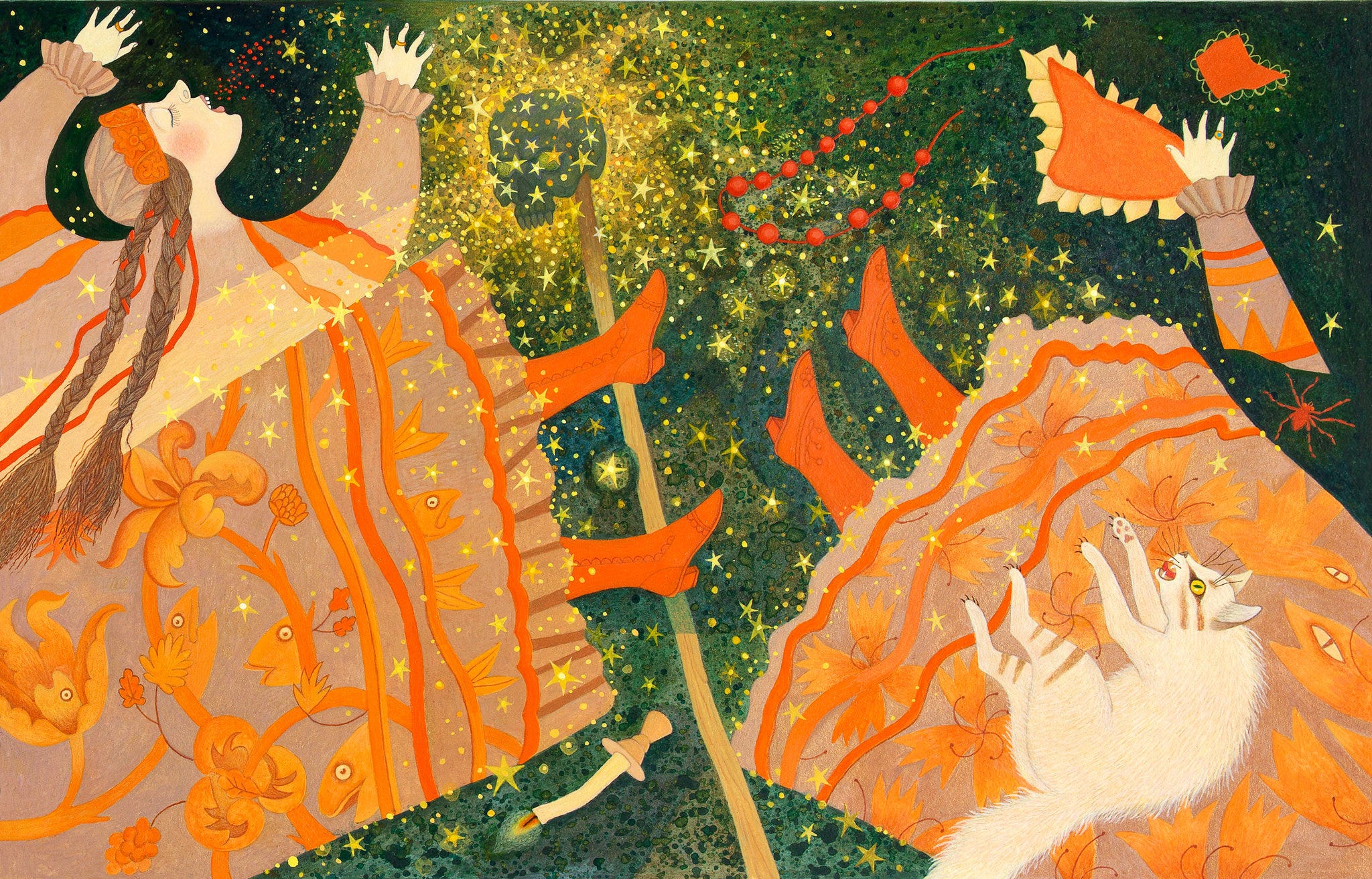
“Vasilisa” (also sometimes called “Vasilisa the Wise” or “Vasilisa the Beautiful”) is a Russian fairytale not too dissimilar to “Cinderella”: the protagonist is a young girl whose mother dies, there’s a spoiled step-sister and evil step-mother who makes the girl do house chores, a magical talisman that helps her endure the chores (in Vasilisa’s story it’s a doll), and a magical old lady. That’s about where the similarities end.
The tale is essentially about Vasilisa learning to trust her intuition, growing from naive girl to wise woman. She also carries a skull-lantern to find her way home out of the woods, a visual and thematic image I’m obsessed with.
Russian ethnographer Alexander Afanasyev’s collection of Russian Fairy Tales also includes the character Vasilisa in the story “The Sea Tsar and Vasilisa the Wise,” in which Vasilisa is the youngest daughter of the Sea Tsar and a shape-shifting bird maiden. Arden utilizes this version in Winternight to explain the origin of Vasya’s magical bloodline— she is the descendant of Chernomor, the sea-king.
In the tale “Ruslan and Lyudmila,” Chernomor is an evil wizard who kidnaps the heroine Lyudmila on her wedding night. Chernomor is also notably a Russian breed of saddle horse, which only adds intrigue to Vasya’s affinity to horses.
Afanasyev published hundreds (according to Wiki, nearly 600) of East Slavic and Russian folk tales, creating one of the largest folklore collections in the world. Naturally, I’m going to be referencing this collection a lot throughout this post.
Baba Yaga
“This witch and that were woven into a single fairy tale. Perhaps I am one of the witches.”
―Katherine Arden, The Winter of the Witch (Winternight Trilogy, #3)
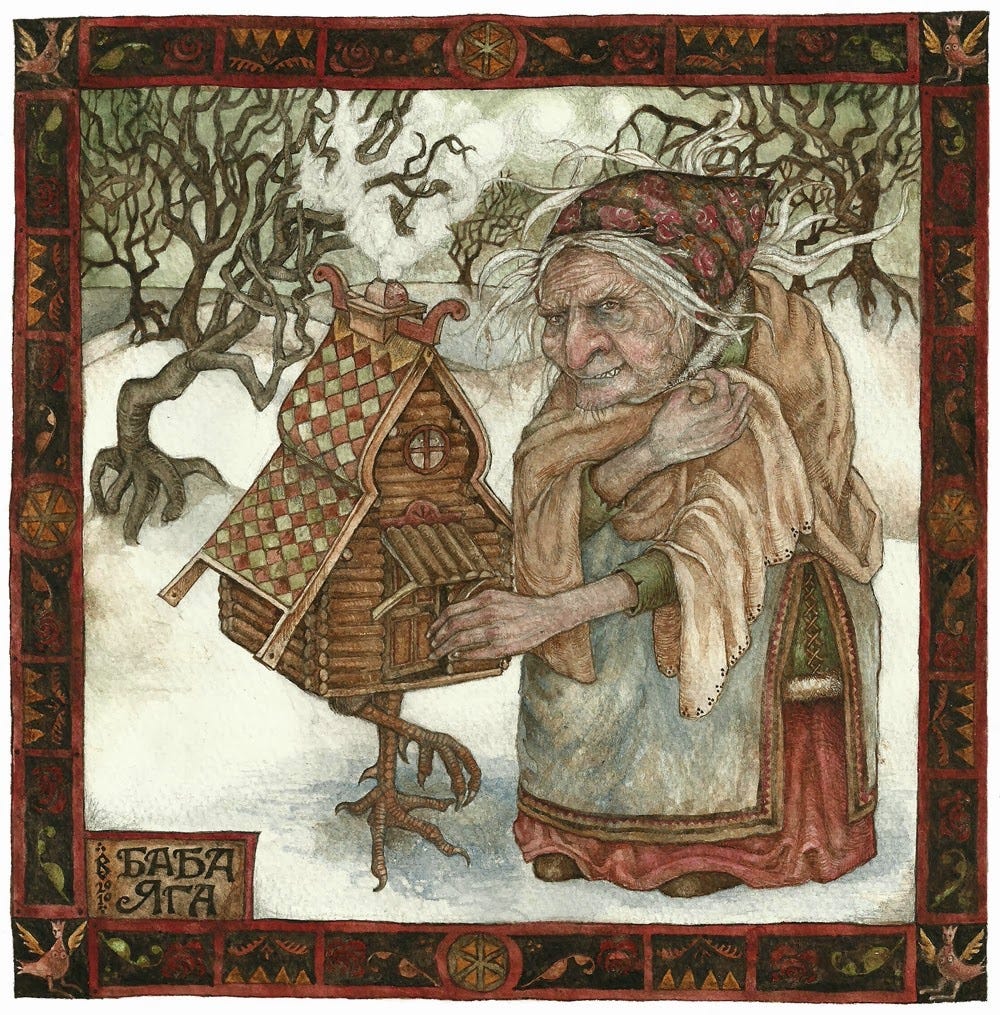
Baba Yaga is commonly portrayed as a crone who lives in a house on chicken legs, flies around on a giant mortar and pestle, and sometimes has iron teeth that she sharpens before eating children. But like the nature of folklore, she is ever-evolving. Not only do these physical details change depending on the storyteller, but her role and relation to the protagonist also change with each tale, and tales about this witch have been told for centuries.
Her name is often understood to mean "Grandmother Witch", though this is challenged and there is no universal agreement on the meaning of Yaga. She is first mentioned in a book on Russian grammar in 1755 but is thought to have existed in the oral tradition of Slavic folktales much earlier.
Author and scholar of Slavic languages Andreas Johns describes Baba Yaga as "a many-faceted figure, capable of inspiring researchers to see her as a Cloud, Moon, Death, Winter, Snake, Bird, Pelican or Earth Goddess, totemic matriarchal ancestress, female initiator, phallic mother, or archetypal image".1
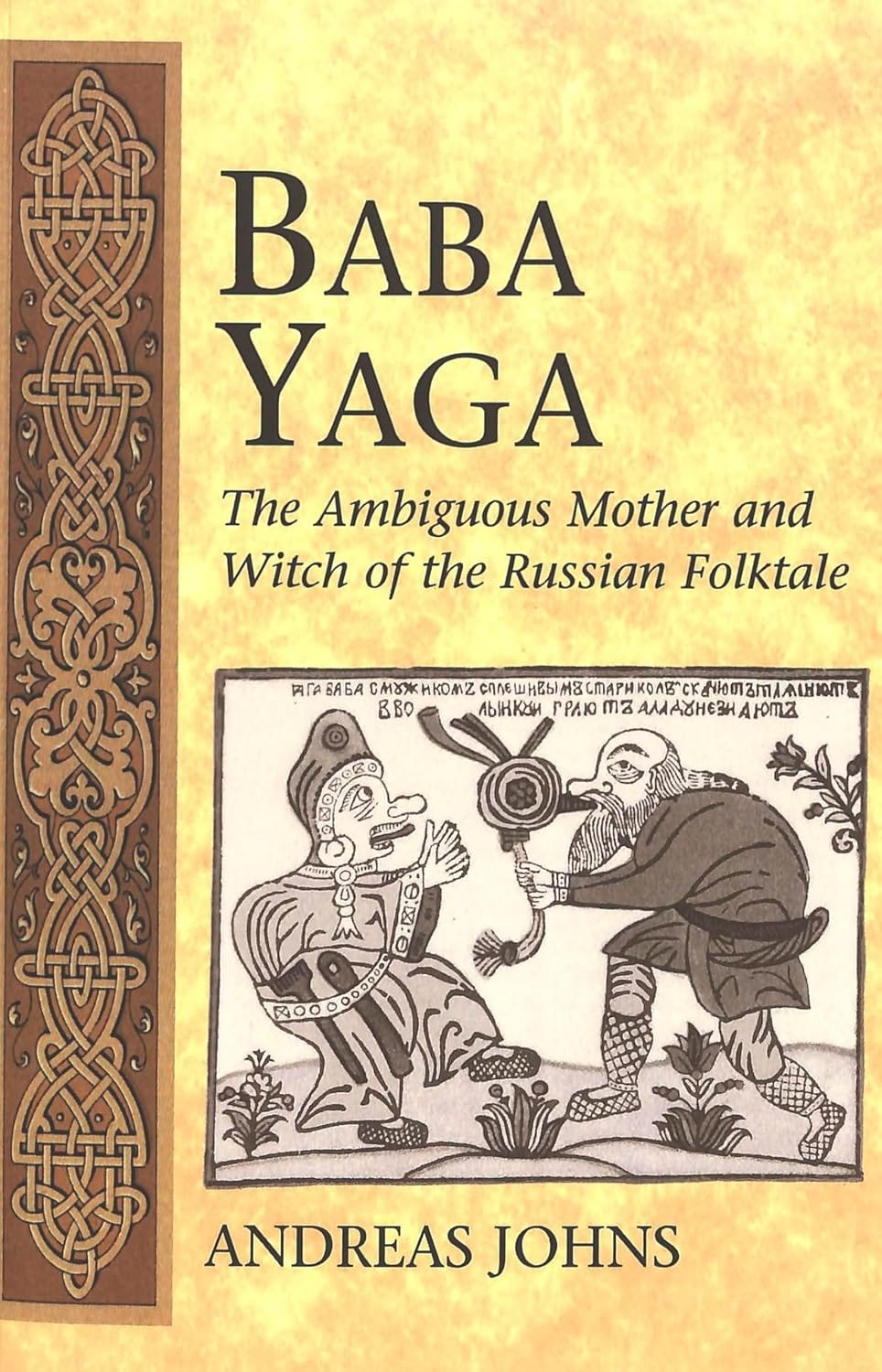
Baba Yaga appears as three sisters in “The Maiden Tsar” featured in Afanasyev’s collection of tales2, a breeder of magic horses in “The Death of Koschei the Deathless” (which also features the defeat of a certain deceptive antagonist we’re also familiar with), a helpful witch in “The Sea Tsar and Vasilisa the Wise,” a blood-sucking foe in “Legless Knight and Blind Knight,” and continues to appear in various forms in multitudes of adaptations and retellings of these and other tales.
Although traditionally depicted as a figure associated with darkness, evil, cannibalism, and death, Baba Yaga is essentially a transformative agent. Her rejection of societal norms frees her to act unconsciously on her desires, and as she does, she changes the lives of those who enter her sphere of influence.
Zhar Ptitsa / The Firebird, and The Horses
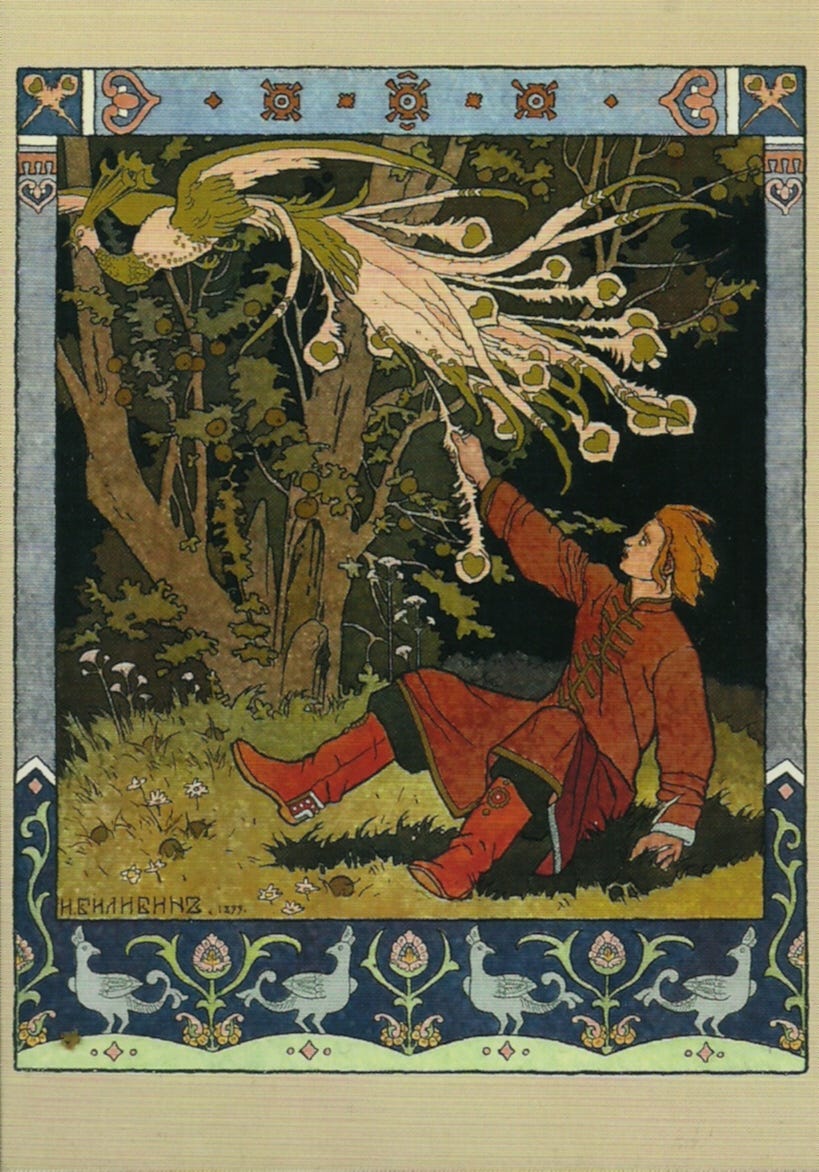
The firebird, according to my research, is a harbinger of doom, a symbol of justice, a beacon of truth, and the coveted prize at the end of the quest which the hero turns to resent.
Irina Zheleznova, author of several books on Ukrainian folklore, translates a version of the firebird legend featuring our protagonist’s folklore namesake, “The Firebird and Princess Vasilisa.” I’m not entirely sure if this Princess Vasilisa is the same character, a little older perhaps, as in “Vasilisa the Wise,” but it’s interesting to imagine so.
In this version, a greedy king orders an archer to hunt the firebird and kidnap Princess Vasilisa to be his wife, and the archer succeeds but ends up being dipped in boiling water. The archer’s horse magically protects him from death and comes out of the boiling water more handsome than the king, and ends up marrying the Princess himself.
It’s not an ending our Vasilisa would have liked for herself, though she probably would have appreciated the archer’s heroic magical horse.
Though the firebird is not often depicted as a winged horse in these tales, as he is in Arden’s trilogy, fiery flying horses are not uncommon in the Slavic myths.
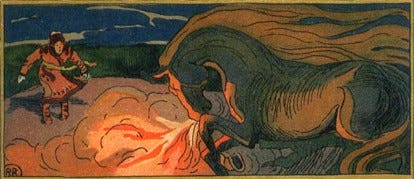
Afanasyev’s collections also hold the origins of the winged horses and the firebird, which show us where Arden’s creatures are derived.
“The Princess on the Glass Mountain,”3 “Tsarevna Yelena, the Beautiful,”4 and “The Horse with Golden-Silver Skin”5 are just some of the tales characterizing these legendary steeds.
I want to share with you a passage that I’m stealing from the Sivko-Burko Wiki page about the narrative trope of the horse helper:
Russian scholar Vladimir Propp argued that the magical horse of the Russian tale Sivko-Burko represented a messenger connected to the Otherworld, and mentioned an ancient Slavic funeral custom of burying a horse with its owner.6 Propp, in a later study, remarked that the male hero finds the magical horses in a crypt, deep in the mountain or under a stone - a motif he called Конь в подвале ("horse in the cellar").7
The Gamayun
She deserved more pages!
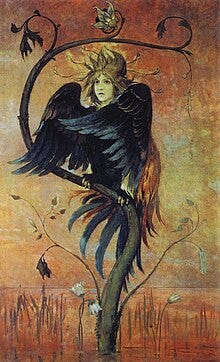
“Why was the gamayun waiting above—yes, I know what the bird means. What is happening?”
―Katherine Arden, The Girl in the Tower (Winternight Trilogy, #2)
Why was the gamayun waiting above?? Vasya, share with the class— What does that bird mean?
The Gamayun, according to Cryptic Wiki (how is this my first time on such a site… I live here now), is a prophetic bird with a woman’s head, which we could already surmise from Arden’s descriptions. There is surprisingly little to be found on the internet about this creature, but from what I gather (context clues), her presence forebodes death. There’s a very lovey looking children’s graphic novel series called “Gamayun Tales: An Anthology of Modern Russian Folk Tales” that illustrates a fresh take on the Gamayun, which I may peruse at some point.
Chyerti
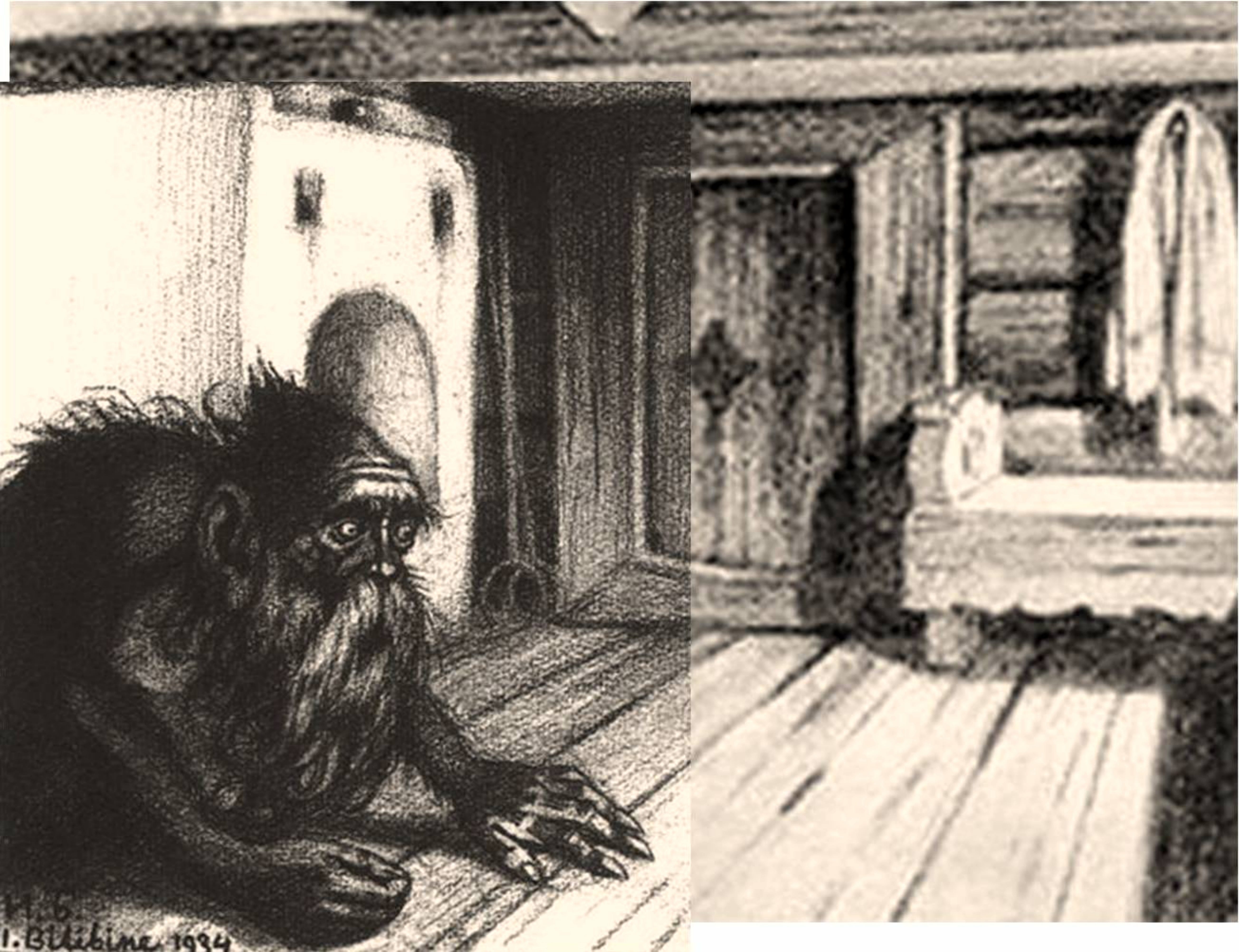
“Chyerti are, just as men are, just as the earth herself is. Chyerti are sometimes wise and sometimes foolish, sometimes good and sometimes cruel. God rules the next world, but what of this one? Men may seek salvation in heaven and also make offerings to their hearth-spirits, to keep their house safe from evil. Did not God make chyerti, as He made everything else in heaven and earth?”
―Katherine Arden, The Winter of the Witch (Winternight Trilogy, #3)
There are so many weird and wonderful creatures mentioned throughout this series, I’d need a whole separate post to cover them all. I feel that Arden did a spectacular job describing the chyerti and what role they played in people’s everyday lives.
What fascinates and excites me most about folklore and mythology is that the fantastical creatures, rituals, protections, and other supposed powers of the natural world were not simply stories told around the fire, they were part of common people’s everyday lives. Just like in last month’s read, where we talked about protective amulets that people wore to ward off sickness during the Black Plague, the practice of leaving offerings to household spirits in exchange for protection of their family, home, crops, and livestock, is a significant piece of anthropological history. And also similar to last month’s read, the point of intrigue for the author is how these fantastical pagan beliefs coincided—not contended— with Christian beliefs.
Arden mentions in the acknowledgments of The Winter of the Witch the idea of Dvoeveriye, dual faith:
The concept of dvoeveriye, dual faith, persisted in Russia up until the Revolution. Orthodoxy coexisted with paganism in peace. Who is to say that wasn’t the work of a girl with strange gifts and green eyes?
As a Roman Catholic-raised queer girl myself, I admit to struggling with an empathetic view on rising 14th-century Catholicism—even if they did lose influence throughout the next century—given how much harm the Church perpetrated throughout the world in the name of eradicating “heresy” thereafter. Raise your hand if you would have been burned at the stake!
But I can appreciate a modern author writing a historical fantasy in which the basic message is “we are one people.” Unification is a hugely important message right now, so I can get behind it gladly. And after all, the book is a Russian history lesson, as Arden also explained in the acknowledgments:
The Battle of Kulikovo really happened. In 1380, on the Don river, Grand Prince Dmitrii Ivanovich acquired his historical moniker Donskoi, of the Don, by leading a combined force from several different Russian principalities against a host commanded by the Tatar temnik Mamai. Dmitrii won. It was the first time the Russian people combined under the leadership of Moscow to defeat a foreign adversary. Some have argued that this event marks the spiritual birth of the nation of Russia.

Art by @itwas_november
“I am a witch,” said Vasya. “I have plucked snowdrops at Midwinter, died at my own choosing, and wept for a nightingale. Now I am beyond prophecy.”
— The Winter of the Witch, Katherine Arden
And now, my faithful readers, we’ve come to the end of this very long and very arduous post. I had a fun time writing it, so I hope you enjoyed reading!
As always, I will leave you with some similar recommendations if you’ve finished the Winternight trilogy and itching for more.
For more Baba Yaga, I recommend Thistlefoot by GennaRose Nethercott. Estranged siblings are reunited after receiving a mysterious inheritance— Baba Yaga’s hut, chicken legs and all. Low urban-ish fantasy, chaotic, beautifully written with poetic prose.
For even more Baba Yaga, but with more of a folk-horror vibe, I recommend Into the Forest: Tales of the Baba Yaga. Edited by Lindy Ryan, this collection brings together some of today’s leading voices of women-in-horror as they pay tribute to the Baba Yaga, and go Into the Forest.
For more Russian folk tales, I gotta recommend Alexander Afanasyev’s Russian Folk Tales translated to English by Leonard A. Magnus.
And I’m adding a fourth this month, because I’d be remiss if I did not recommend you Women Who Run With the Wolves by Dr. Clarissa Pinkola Estés. Within every woman there lives a powerful force, filled with good instincts, passionate creativity, and ageless knowing. Dr. Estés has created a new lexicon for describing the female psyche. Fertile and life-giving, it is a psychology of women in the truest sense, a knowing of the soul. It’s seminal, it’s iconic, it will change your life.
Until next time, be well, be kind, be you~

Johns, Andreas (2004). Baba Yaga: The Ambiguous Mother and Witch of the Russian Folktale. New York: Peter Lang. ISBN 978-0-8204-6769-6.
Afanasyev, Alexander (1973) [1945]. Russian Fairy Tales. Translated by Guterman, Norbert. New York: Pantheon Books. ISBN 978-0-394-73090-5.
Haney, Jack V. (2015). "179–81 Sivko-Burko". The Complete Folktales of A. N. Afanas'ev, Volume II: Black Art and the Neo-Ancestral Impulse. University Press of Mississippi. pp. 3–9. ISBN 978-1-4968-0278-1. Project MUSE chapter 1659238
Афанасьев, Александр Николаевич. Народные русские сказки. Выпуск VI. Moskva: 1861. pp. 135-137. [1]
Haney, Jack, V. An Anthology of Russian Folktales. London and New York: Routledge. 2015 [2009]. pp. 98-101. ISBN 978-0-7656-2305-8.
The Russian Folktale by Vladimir Yakovlevich Propp. Edited and Translated by Sibelan Forrester. Foreword by Jack Zipes. Wayne State University Press, 2012. p. 223. ISBN 9780814334669.
Propp, Vladimir. Theory and History of Folklore. Translated by Ariadna Y. Martin and Richard P. Martin and several others. Edited, with an Introduction and Notes, by Anatoly Liberman. Theory and History of Literature, Volume 5. Minneapolis: University of Minnesota Press, 1984. p. 207 (Chapter 8, footnote nr. 2).